
Water Filtration Systems in Lafayette, CO
Local Water Softening Equipment Supplier Expertise
Lafayette's single-family homes and newer subdivisions like Indian Peaks face moderate mineral buildup from local groundwater. A water softening equipment supplier in Lafayette, CO addresses scale deposits on fixtures, appliance wear, and soap efficiency loss. This page explains what you should expect when choosing a system for Boulder County homes.
How Water Softening Works
Water softening removes minerals like calcium and magnesium that cause spotting and residue. Most systems use ion exchange—a resin bed swaps hardness minerals for sodium or potassium. The resin regenerates periodically with salt, keeping your water soft. Alkaline remineralization systems add beneficial minerals back after softening.
Why Mineral Buildup Matters in Lafayette
Lafayette's water comes from local wells and surface sources containing moderate mineral levels. Over time, this buildup clogs plumbing lines, reduces water heater efficiency, and stains fixtures. Soft water also extends appliance lifespan and improves cleaning power in kitchens and bathrooms.
What's Involved in Equipment Selection
Choosing the right system requires understanding your household size, water hardness level, and available space. Most Lafayette homes in neighborhoods like Baseline and Waneka Lake benefit from whole-house systems that treat water at the main entry point.
Water Test
A professional analysis measures hardness in ppm (parts per million) or gpg (grains per gallon). This determines system size and type needed for your Lafayette home.
System Sizing
Capacity is based on daily water usage and hardness levels. Indian Peaks and newer neighborhoods typically use 24–32 gpd (gallons per day) capacity units.
Installation Point
Equipment installs where water enters your home, usually near the utility room or basement. Permits may be required in Lafayette.
Plumbing Connection
Copper or PVC lines connect the unit to your main supply. Bypass valves allow you to run unsoftened water to outdoor spigots if needed.
Salt / Regenerant Tank
A separate tank holds salt or potassium pellets used during regeneration cycles. Tank size depends on hardness and household size.
Testing & Optimization
After installation, your supplier runs water tests and adjusts system settings to match your hardness level and household demand.
You'll always know what's happening next—and when.
Our Services
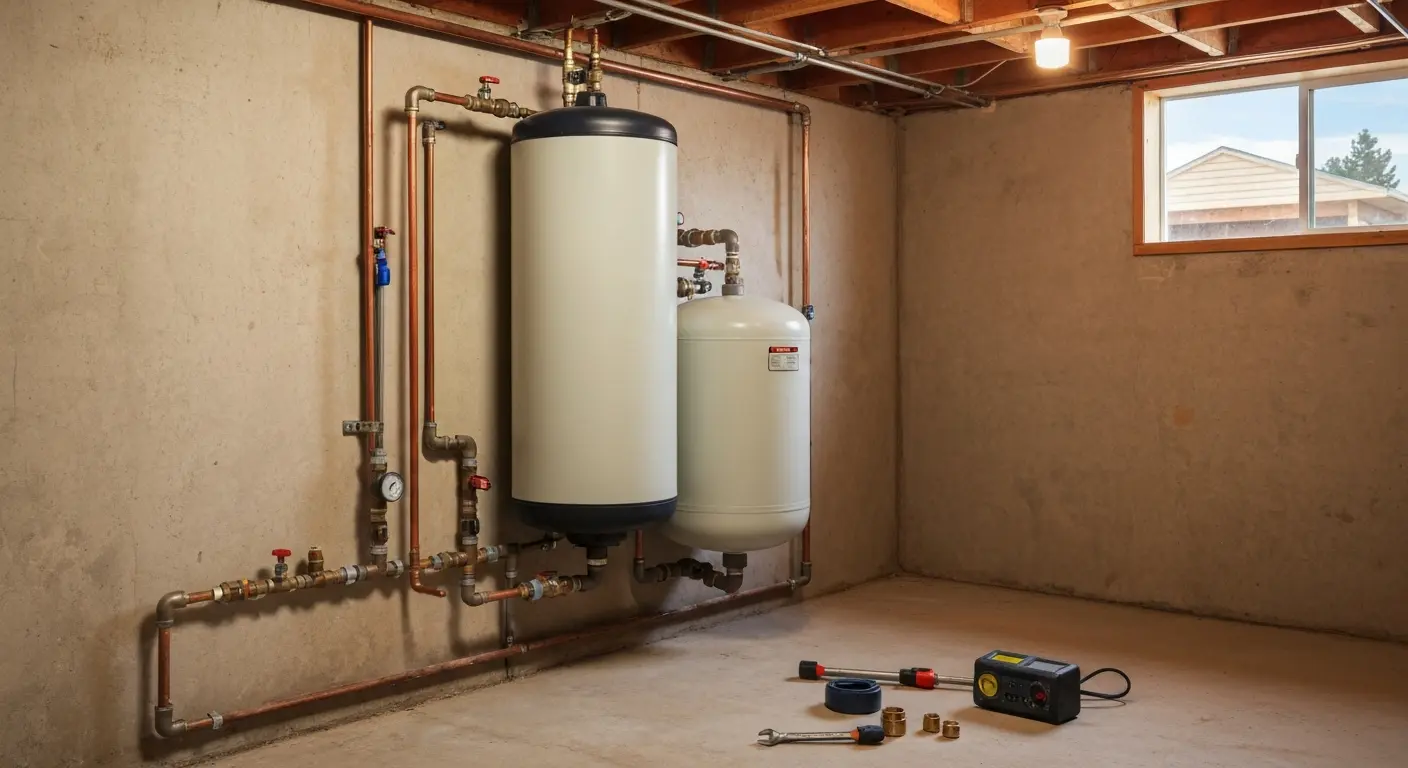
Whole-home water softener setup in White Hawk Ranch, Lafayette
Water Softener Systems
Full-scale ion exchange systems that remove hardness minerals from 100% of your home's water supply. Ideal for homes with moderate to hard water and family sizes of 3 or more. Each system is sized based on your water hardness test and daily usage patterns in Lafayette neighborhoods.
- Custom-sized tanks for household demand
- Automatic or manual regeneration cycles
- Salt or potassium pellet options
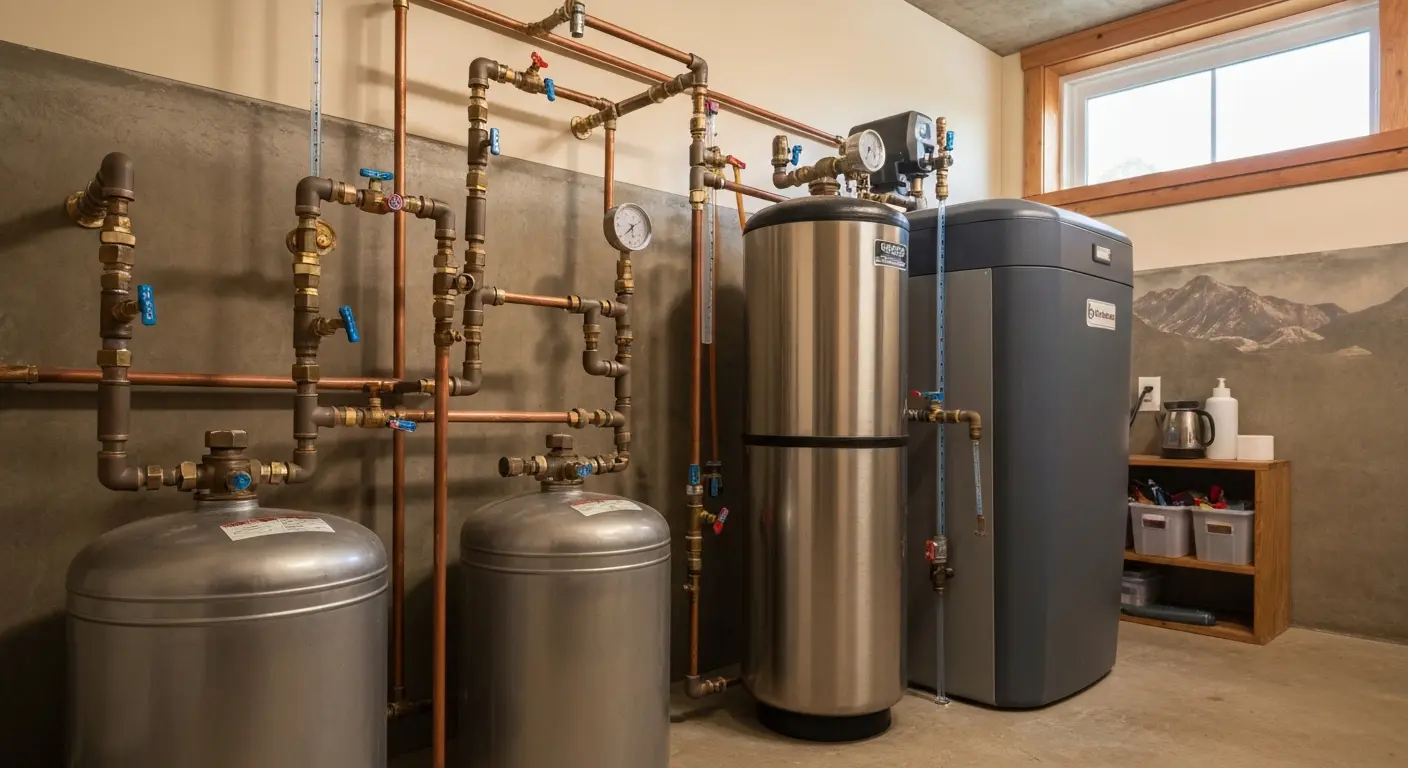
Remineralization tank paired with softener in Waneka Lake, Lafayette
Alkaline Remineralization Systems
Post-softening filters that add back beneficial minerals like calcium, magnesium, and alkalinity. Prevents overly soft water that can taste flat or feel slippery. Works alongside softener systems to balance water quality for Lafayette's growing families.
- Restores natural mineral balance
- Improves taste and mouthfeel
- Reduces water waste vs. reverse osmosis
Why Local Water Softening Expertise Matters
Lafayette sits in Boulder County where water hardness varies by neighborhood and source. Systems that work for Indian Peaks may need adjustment for Spring Creek or Blue Heron due to different water supplies. Local expertise ensures your equipment matches your exact conditions.
550+ local systems installed in Boulder County homes—many in Lafayette's established neighborhoods and newer developments.
Scale Prevention & Appliance Protection
Hard water deposits reduce water heater efficiency, clog aerators, and damage fixtures. Soft water extends the life of washing machines, dishwashers, and water heaters—saving money over years of ownership.
Cleaning Power & Comfort
Soft water makes soap and detergents more effective. Dishes come out spot-free, laundry feels softer, and your shower leaves skin feeling cleaner—a quality-of-life improvement many Lafayette residents notice immediately.
Affordable Maintenance
Salt or potassium refills are inexpensive and readily available in Lafayette. No special filters or cartridges to track—just periodic tank refills and annual checks. Most systems operate for 15+ years with basic care.
Water Quality in Lafayette & Boulder County
Boulder County water supplies vary by neighborhood. Some areas, like parts of Baseline, receive water from mountain runoff (softer). Others pull from underground wells where mineral content is higher. Understanding your specific supply helps choose the right system size and type.
Hardness Levels & What They Mean
Water hardness is measured in ppm (parts per million) or gpg (grains per gallon). Lafayette typically falls in the soft-to-moderate range, but specific hardness depends on your neighborhood's water source. A professional test identifies your exact level and guides equipment selection.
Getting Here from Your Neighborhood
Most Lafayette homes are within 10 minutes of our service hub. We serve Indian Peaks, Waneka Lake, White Hawk Ranch, Spring Creek, Blue Heron, and Baseline neighborhoods. If you're near downtown Lafayette on Highway 287, we can arrange a convenient water test and equipment consultation.
Call or check availability in your neighborhood to schedule a free water quality assessment. We'll determine your hardness level and recommend equipment that fits your home and budget.
Featured Question: How Hard Is Lafayette's Water?
What hardness level do most Lafayette homes experience?
Lafayette water typically ranges from soft to moderately hard depending on neighborhood water source. Most homes show visible signs: white deposits on faucets, reduced soap lather, or dull-looking dishes. A professional water test reveals your exact ppm level and guides whether a water softener will benefit your home and appliances.
- Mountain-fed areas (parts of Baseline) tend softer, 40–80 ppm
- Well-sourced areas (Indian Peaks, Spring Creek) run 80–150 ppm
- Visible scale buildup usually appears above 100 ppm
Request a free water test to know your exact hardness level and next steps.
Frequently Asked Questions
Do I really need a water softener in Lafayette?
A free water test answers this. If your hardness exceeds 100 ppm and you see scale buildup or soap issues, a softener will pay for itself in appliance longevity and cleaning efficiency. Many Lafayette homeowners report noticeable quality-of-life improvements within weeks.
What's the difference between salt and potassium softeners?
Salt-based systems use sodium chloride and are more affordable. Potassium-based systems use potassium chloride, cost more, and may be preferred if you're on a low-sodium diet or concerned about soil salt buildup. Both work equally well at removing hardness minerals.
Will a water softener affect my water pressure?
A properly sized and installed system won't reduce pressure noticeably. Most Lafayette homes see no change or very minor fluctuation during regeneration cycles. Our installer confirms water flow before you take possession.
How often does the system regenerate?
Regeneration frequency depends on hardness level and household water use. Most Lafayette homes regenerate every 7–14 days. Smart systems adjust automatically based on actual usage, preventing unnecessary salt waste and downtime.
Do I need permits to install a water softener in Lafayette?
Lafayette may require permits for main-line connections. Our team handles permit applications and city coordination, ensuring your installation complies with local plumbing codes. Costs are minimal and typically passed through in a straightforward quote.
Can I run unsoftened water to my outdoor spigots?
Yes. A bypass valve diverts your outdoor water supply, letting you keep hard water for plants and outdoor use while softening indoor plumbing. This is standard in Lafayette installations and adds minimal cost.
DISCOVER WHAT OUR CUSTOMERS HAVE TO SAY ABOUT US
REVIEWS
proudly serving these areas
Fort Collins, CO
Greeley, CO
Loveland, CO
Windsor, CO
Johnstown, CO
Denver, CO
Aurora, CO
Lakewood, CO
READY TO take the next step?
get a free quote TODAY!

QUICK LINKS
our services
service areas
operating HOURS
Mon: 8:00 am - 6:00 pm
Tue: 8:00 am - 6:00 pm
Wed: 8:00 am - 6:00 pm
Thu: 8:00 am - 6:00 pm
Fri: 8:00 am - 6:00 pm
Sat: 10:00 am - 4:00 pm
Sun: Closed - Closed