
Water Filtration Systems in Aurora, CO
Local Water Softening Equipment Supplier Expertise
In Aurora, Colorado, hard water isn't a minor inconvenience—it's a persistent challenge affecting 400,000+ residents. A water softening equipment supplier | Aurora, CO handles the mineral-heavy water flowing from the South Platte River basin and deep aquifer wells. With hardness levels reaching 11–13 grains per gallon (GPG), scale buildup damages fixtures, clogs aerators, and cuts appliance life short. This page covers what hard water means for Aurora homes, how softening systems work, and why testing your water is the first step.
How Water Softening Works
Water softening removes dissolved calcium and magnesium minerals before they cause damage throughout your home.
Testing Your Water First
Before you choose a softening system, know exactly what's in your Aurora tap water. Professional testing identifies hardness level, mineral composition, and any contaminants beyond minerals. Test results guide system sizing and treatment type. Many Aurora homes in original neighborhoods (6th to 25th Avenue, Yosemite to Peoria) have older pipes; testing reveals lead risk and corrosion patterns specific to your address.
Salt-Based Ion Exchange Softeners
Salt-based systems use ion exchange to swap calcium and magnesium for sodium. Resin beads trap hard minerals; periodic salt regeneration restores resin capacity. For Aurora's very hard water (10+ GPG), salt-based systems deliver the strongest results. Maintenance involves refilling salt periodically and annual resin bed cleaning.
Whole-Home vs. Point-of-Use Systems
Whole-home systems treat all water entering your house, protecting pipes, water heaters, and appliances. Point-of-use systems (like under-sink filters) treat water at one faucet only. Aurora homeowners with hard water typically benefit from whole-home softening paired with a reverse osmosis (RO) filter at the kitchen sink for drinking water. This combination removes both minerals and contaminants like arsenic and chromium-6 detected in some Aurora areas.
The right system size and type depends on your household water usage and existing plumbing.
What Hard Water Does to Aurora Homes
Visible damage appears quickly in bathrooms, kitchens, and utility areas—often within weeks.
Scale Buildup on Fixtures
White crusty deposits form on faucets, showerheads, and around drains. Soap scum accumulates on shower doors within days. Water pressure drops as mineral layers clog aerators.
Appliance Wear & Failure
Hard water shortens water heater life from 12–15 years to 8–9 years. Scale insulates heating elements, forcing them to work 25% harder. Dishwashers and washing machines clog and fail prematurely.
Skin, Hair & Laundry Issues
Soap doesn't lather well in hard water. Mineral residue coats skin (causing dryness and irritation) and hair. Laundry feels stiff and looks dingy despite washing.
Aurora residents lose $1,800–$2,700 annually to hard water damage. A water softener pays for itself in energy savings, reduced detergent use, and fewer appliance repairs within 10 years.
Water Quality Challenges Specific to Aurora
Aurora draws water from the Colorado, Arkansas, and South Platte River basins. That journey through limestone and shale deposits leaves a heavy mineral load.
Hard Water Minerals
Aurora's water contains 215 ppm (parts per million) of total dissolved solids—mostly calcium and magnesium. Hardness exceeds 10 GPG, ranking among Colorado's hardest. Softening removes these minerals before they coat your plumbing and appliances.
Other Contaminants Beyond Hardness
While Aurora's municipal water meets EPA legal standards, independent testing identifies contaminants exceeding health advocacy guidelines. Arsenic, chromium-6, chloroform, and nitrates appear at levels above EWG thresholds. Softeners don't remove these contaminants; reverse osmosis filters do. Many Aurora residents pair a whole-home softener with an RO drinking water system for comprehensive protection.
Lead in Older Aurora Neighborhoods
Homes built before 1960 in Original Aurora (between 6th and 25th Avenues, Yosemite to Peoria Streets) may have lead service lines. Hard water corrodes these pipes, releasing lead into your home. Testing reveals your home's lead risk and guides treatment decisions. Softening water reduces corrosion and lowers lead leaching.
Why Local Expertise Matters for Aurora
Aurora's water challenges vary by neighborhood and water source. Local suppliers understand these differences.
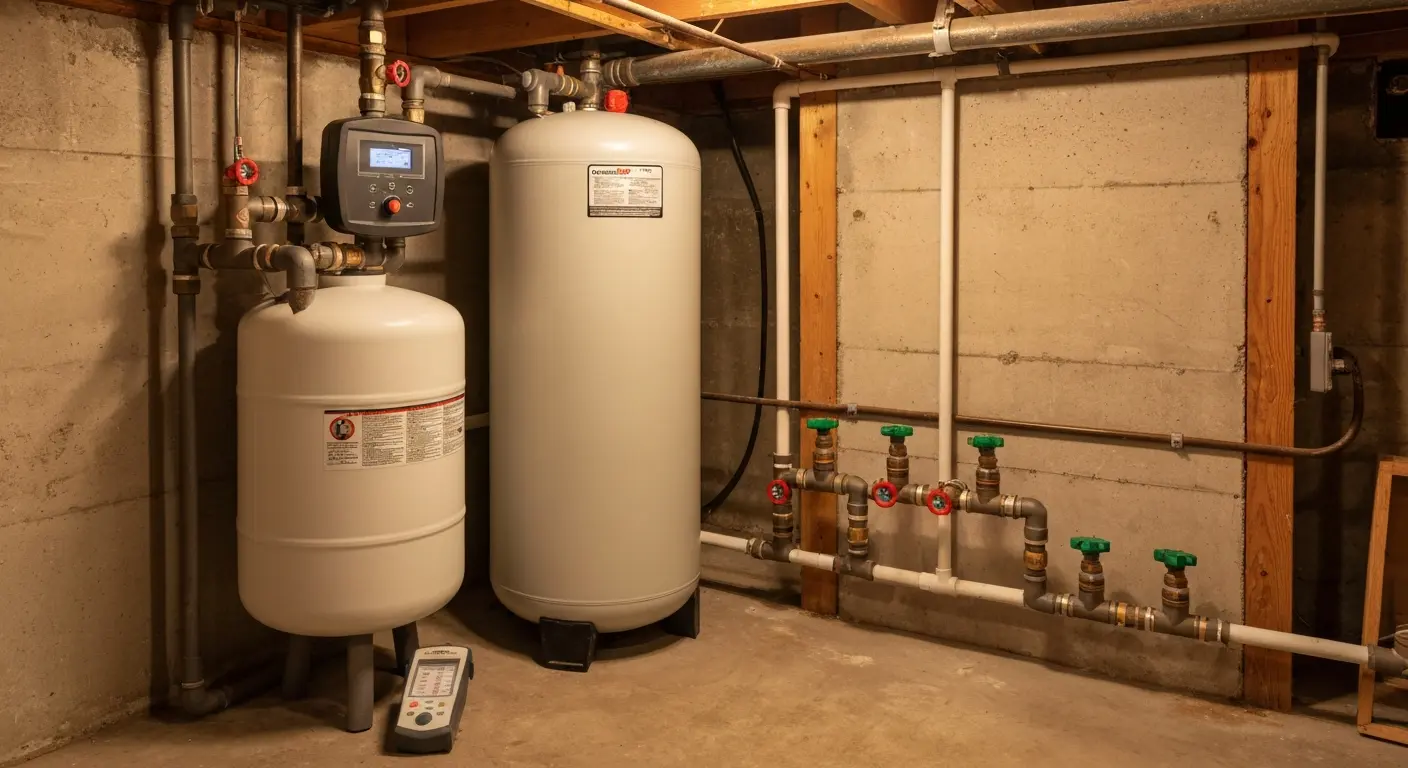
Whole-home softener systems protect Aurora's appliances from hard water scale damage.
Custom Sizing for Your Home
System capacity must match your household size and water usage. An undersized system regenerates too often, wasting salt. An oversized system is inefficient. Local suppliers assess your home's age, pipe material, existing hardness level, and usage patterns to recommend the right capacity.
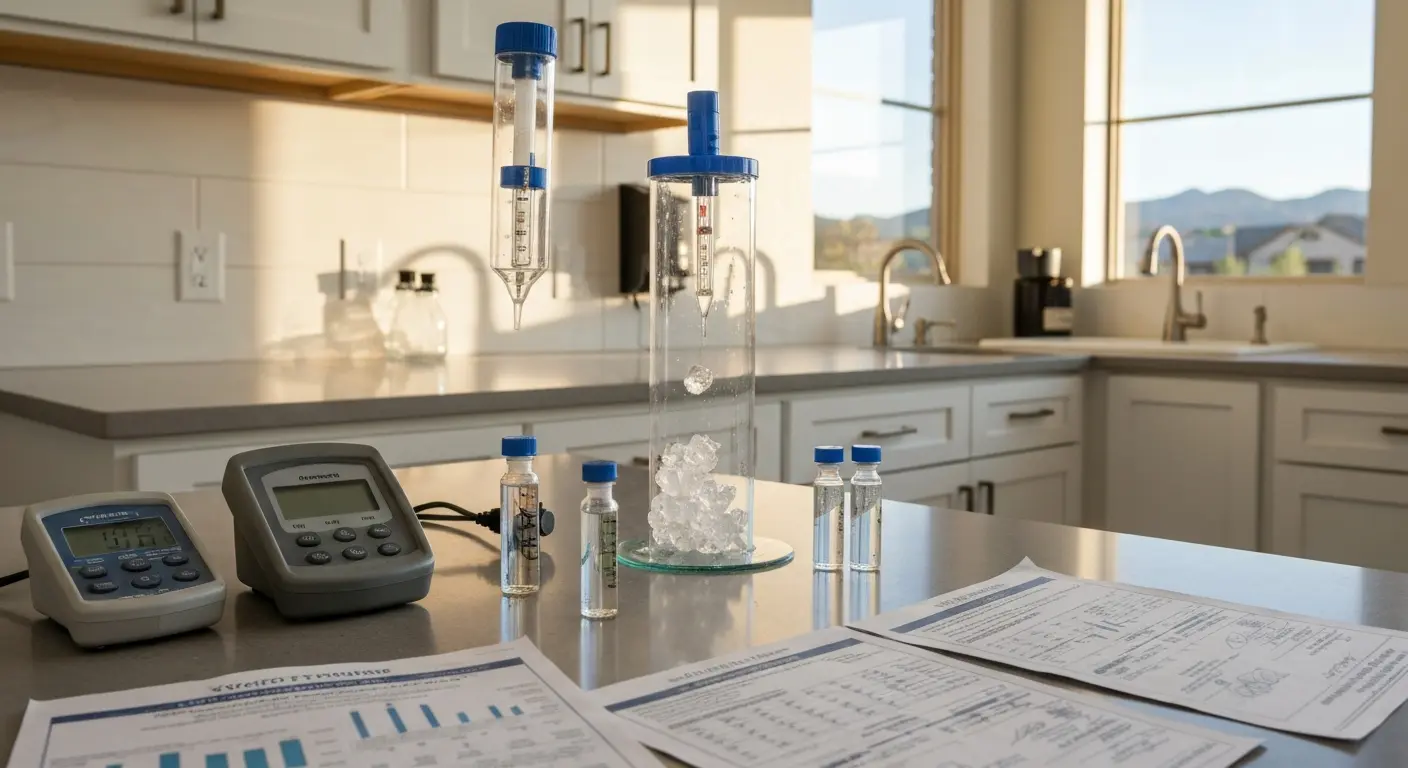
Professional water testing reveals hardness, minerals, and contaminants unique to your Aurora address.
Neighborhood-Specific Knowledge
Hardness and water quality vary across Aurora. Neighborhoods near the South Platte River (Stapleton, near Cherry Creek State Park, Denver Tech Center) draw from different sources than Original Aurora. Local suppliers track these patterns and adjust treatment recommendations accordingly. They also know permit requirements for system installation in different Aurora areas.
Getting Your Water Tested
A professional water test is the only way to know exactly what's flowing from your Aurora taps.
What Gets Tested
Aurora conducts 85,000+ tests annually for 150+ contaminants. A professional in-home test measures hardness (in GPG), pH, iron, manganese, chlorine, and bacteria. For added insight, expanded testing identifies arsenic, chromium-6, nitrates, and other concerns detected in Aurora's supply. Results guide system selection and sizing.
Free Testing Options
Many local water softening suppliers offer free in-home water tests. Technicians test every faucet, review your plumbing and appliances, and provide a written report with recommendations—no obligation to purchase. Aurora Water Customer Service (303-326-8645) also provides information on independent testing through the Colorado State Public Health Laboratories.
Understanding Your Results
Hardness below 60 ppm (3.5 GPG) is soft. 60–120 ppm is moderately hard. Above 180 ppm is hard. Aurora typically reads 180–215 ppm—very hard. Your test will also flag contaminants. A local supplier interprets results and sizes a softener to match your household's specific needs and budget.
Finding a Water Softening Equipment Supplier in Aurora
Choose a supplier with local knowledge and certified expertise.
Water Quality Association Certification
Look for WQA-certified technicians. Certification means the supplier has passed rigorous exams on water treatment, system sizing, and installation best practices.
Aurora-Focused Experience
Choose a supplier that serves Aurora regularly. They understand local water sources, common hardness patterns, and permit requirements across different Aurora neighborhoods.
Full-Service Support
Reliable suppliers offer free water testing, custom sizing, professional installation, and ongoing maintenance plans. They test every tap and provide a written report before recommending a system.
Installation & Service Areas
Confirm the supplier serves your Aurora neighborhood. Some focus on Original Aurora (older homes with plumbing challenges), while others cover expanded Aurora, Stapleton, or outlying areas. Ask about warranty length, salt delivery options, and annual resin bed cleaning schedules. A local supplier can respond quickly if a system needs service.
Frequently Asked Questions
Is Aurora water hard?
Yes. Aurora's water hardness ranges from 11–13 GPG, classified as 'very hard.' It ranks among Colorado's hardest municipal water supplies due to mineral-rich sources from the South Platte River basin and deep aquifer wells.
Do I need both a softener and a water filter?
For Aurora, yes. A water softener removes hardness minerals (calcium and magnesium). A reverse osmosis (RO) filter removes contaminants like arsenic and chromium-6. Many residents pair both: whole-home softening for all water, RO for drinking water only.
How often does a softener need salt?
Refill frequency depends on hardness, household size, and water usage. Aurora's very hard water (10+ GPG) typically requires salt refills every 4–8 weeks for a family of four. Your supplier will advise on salt delivery options and automatic refill schedules.
Will softened water taste different?
Most people notice little difference. Many prefer the smooth feel of softened water on skin and hair. If taste matters, pair your softener with an RO drinking water filter at the kitchen sink for crisp, mineral-free drinking water.
Can I install a softener in an older Aurora home?
Yes. Older Aurora homes (Original Aurora, pre-1960) often have corroded or lead service lines that soften water helps protect. A local supplier assesses your plumbing before recommending a system location and size. Some homes require a pre-filter to remove sediment before the softener.
What neighborhoods in Aurora have the hardest water?
All Aurora neighborhoods receive similarly hard water because they share the same municipal treatment plants. However, older homes (Original Aurora, between 6th–25th Avenues) may show worse visible scale due to aging fixtures and pipes. Testing your specific address provides precise hardness levels.
DISCOVER WHAT OUR CUSTOMERS HAVE TO SAY ABOUT US
REVIEWS
proudly serving these areas
Fort Collins, CO
Greeley, CO
Loveland, CO
Windsor, CO
Johnstown, CO
Denver, CO
Aurora, CO
Lakewood, CO
READY TO take the next step?
get a free quote TODAY!

QUICK LINKS
our services
service areas
operating HOURS
Mon: 8:00 am - 6:00 pm
Tue: 8:00 am - 6:00 pm
Wed: 8:00 am - 6:00 pm
Thu: 8:00 am - 6:00 pm
Fri: 8:00 am - 6:00 pm
Sat: 10:00 am - 4:00 pm
Sun: Closed - Closed